Müll, recycling guidance for newcomers in Germany
A scan-first mobile app that tells a newcomer in Germany which bin an item belongs in, in their language, tailored to the city they live in, without making them feel stupid for not knowing.
Recycling in Germany is a system newcomers inherit without a manual.
Germany has one of the most sophisticated recycling systems in the world, four to six bins per household, rules that vary by Bundesland and city, and signage that assumes native-level German fluency.
For newcomers, the system is both daily and opaque. Müll was my self-initiated response to a problem I'd lived through myself after moving to Düsseldorf.
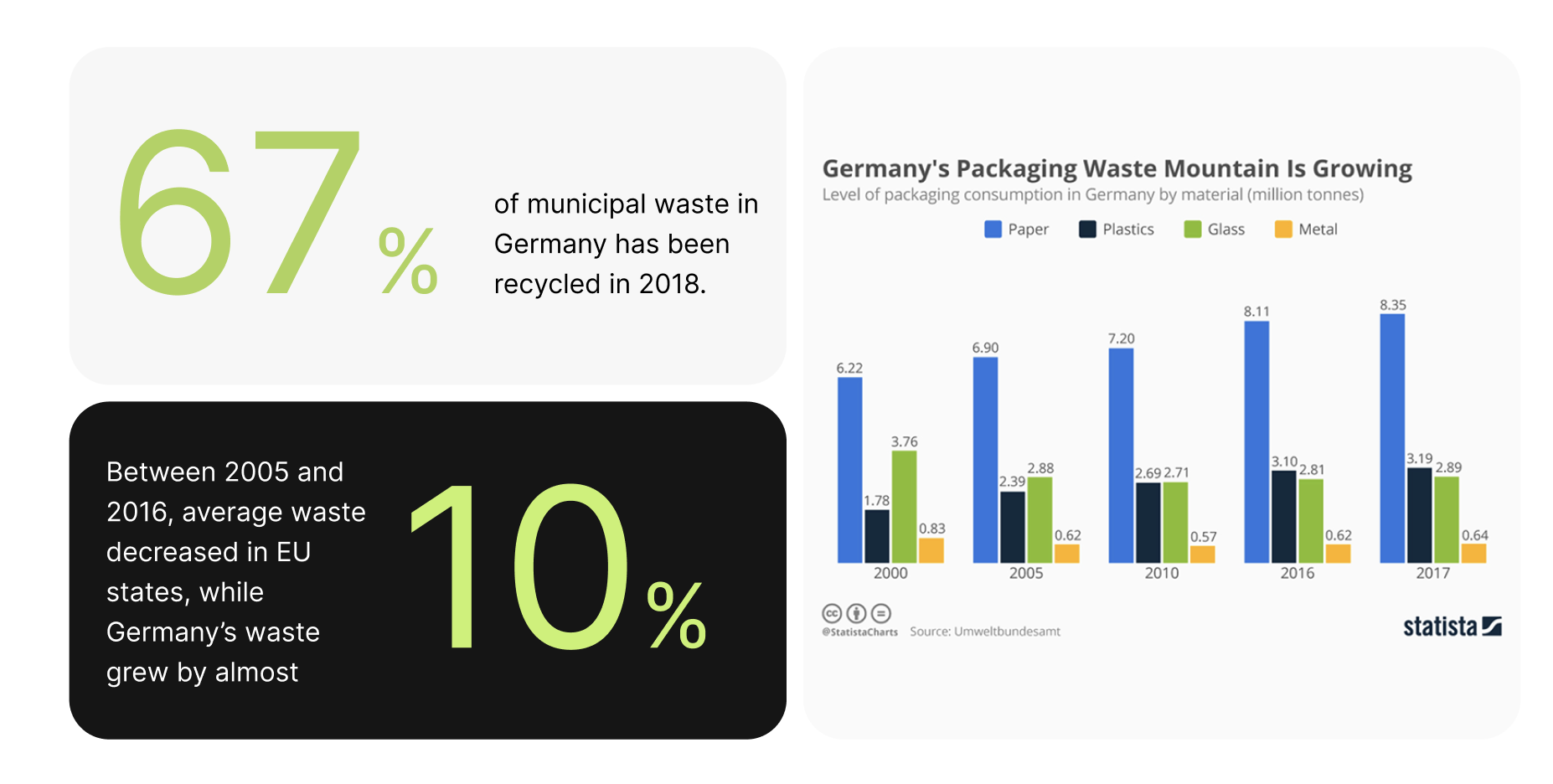
The rules are dense, the German words are specific, and they change when you cross city lines.
I interviewed 6 people who had moved to Germany in the last 3 years, each over 40 minutes. The pattern was less about rules and more about shame.
- Language barrier, rules are only in German, hard to follow for newcomers.
- Location dependence, disposal rules vary city to city, no easy way to know what applies.
- Interpretation gap, translation alone doesn't help if you don't know what a category means.
Underneath all three: the fear of getting it wrong in front of neighbours.
The underlying need wasn't information. It was permission to act without feeling stupid.
I clustered the interview transcripts into an affinity map. Three quotes kept re-surfacing in different words:
"I've lived here two years and I still tiptoe to the bin at night because I'm worried my neighbour will see me put something in the wrong one."Software engineer, moved from Brazil
"Google Translate tells me 'Verpackung' means 'packaging'. Great. Which bin is packaging?"Researcher, moved from India
"I googled 'pizza box Düsseldorf recycling' three times before I gave up and just put it in the paper bin. I still don't know if that was right."Student, moved from Vietnam
That reframed the brief: Müll's job is to make the correct answer feel obvious, in the moment, with zero shame.
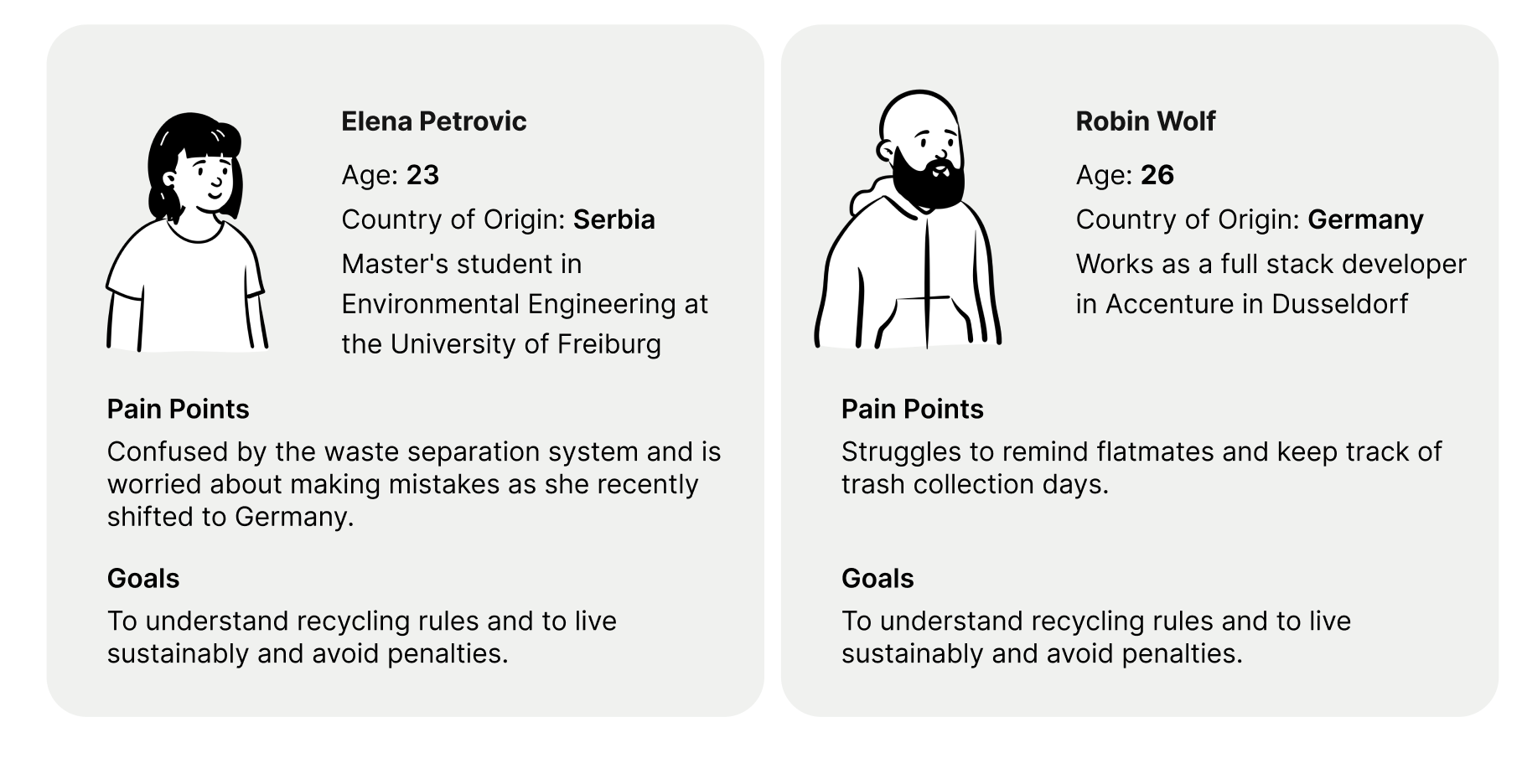
Affinity map clustered into a primary persona, "the recent arrival who wants to do the right thing but doesn't know how".
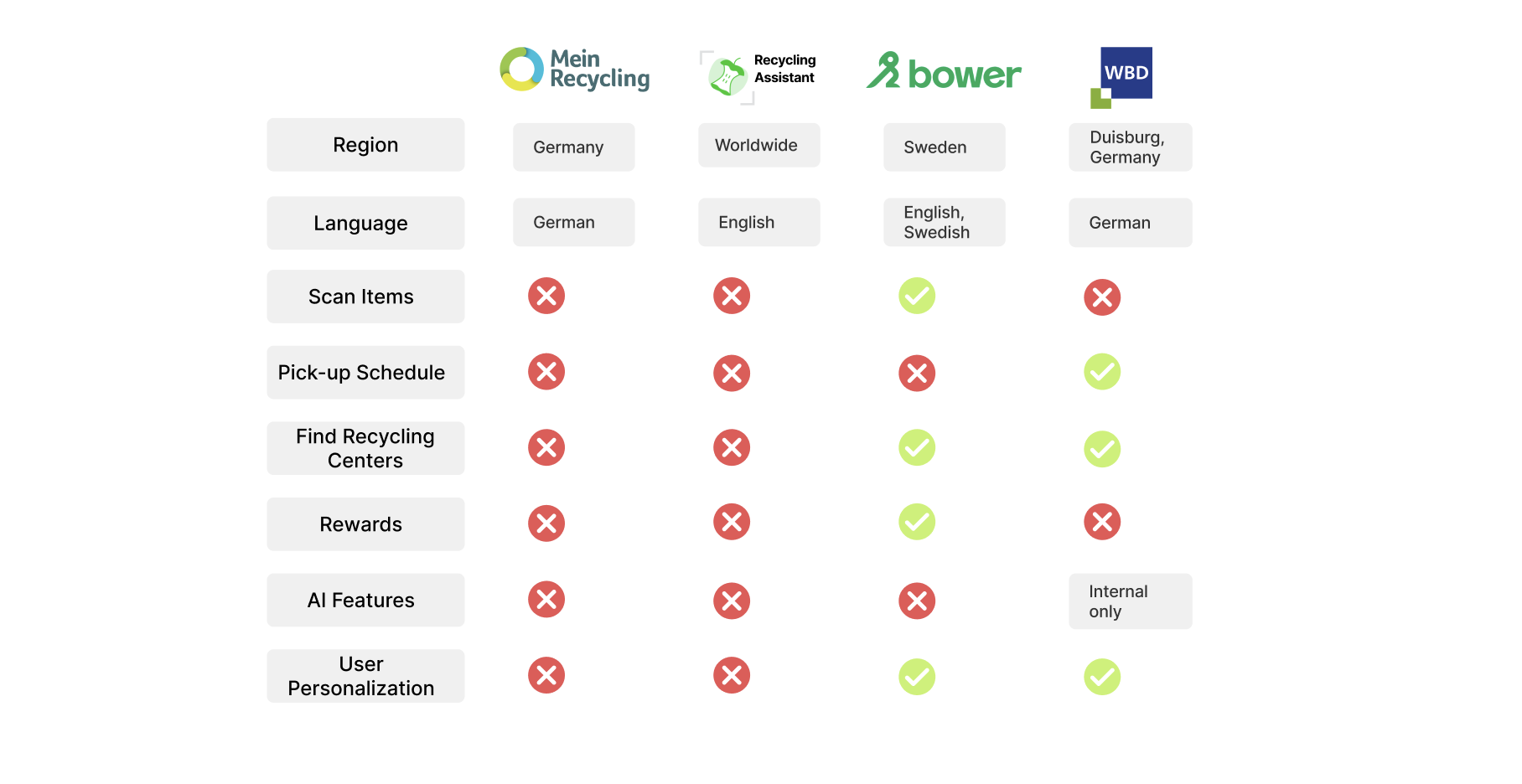
Market research, the existing landscape of recycling apps for Germany, and the gaps.
Four decisions that made the app feel invisible.
Scan-first, not search-first.
Four of six interviewees said they didn't know the German word for what they were holding. A search bar would have hit the same wall as Google Translate. A camera bypasses language entirely, you point, Müll answers.
Location-aware by default.
Two testers abandoned a competitor app at the city-picker screen. Asking "which city?" before giving any value made the app feel like paperwork. Müll reads location silently on first launch; the user never sees a form.
Gamification as reinforcement, not core loop.
I tested two prototypes, one streak-first, one scan-first. The streak version made two newcomers feel "treated like a child." Streaks moved to a secondary tab; the core scan flow stayed unlockable and shame-free.
Icons alongside text, always.
Colour-only categorisation (common in German recycling signage) failed with a colour-blind tester. Every category now pairs a visual symbol with the label, so recognition doesn't depend on colour or reading.
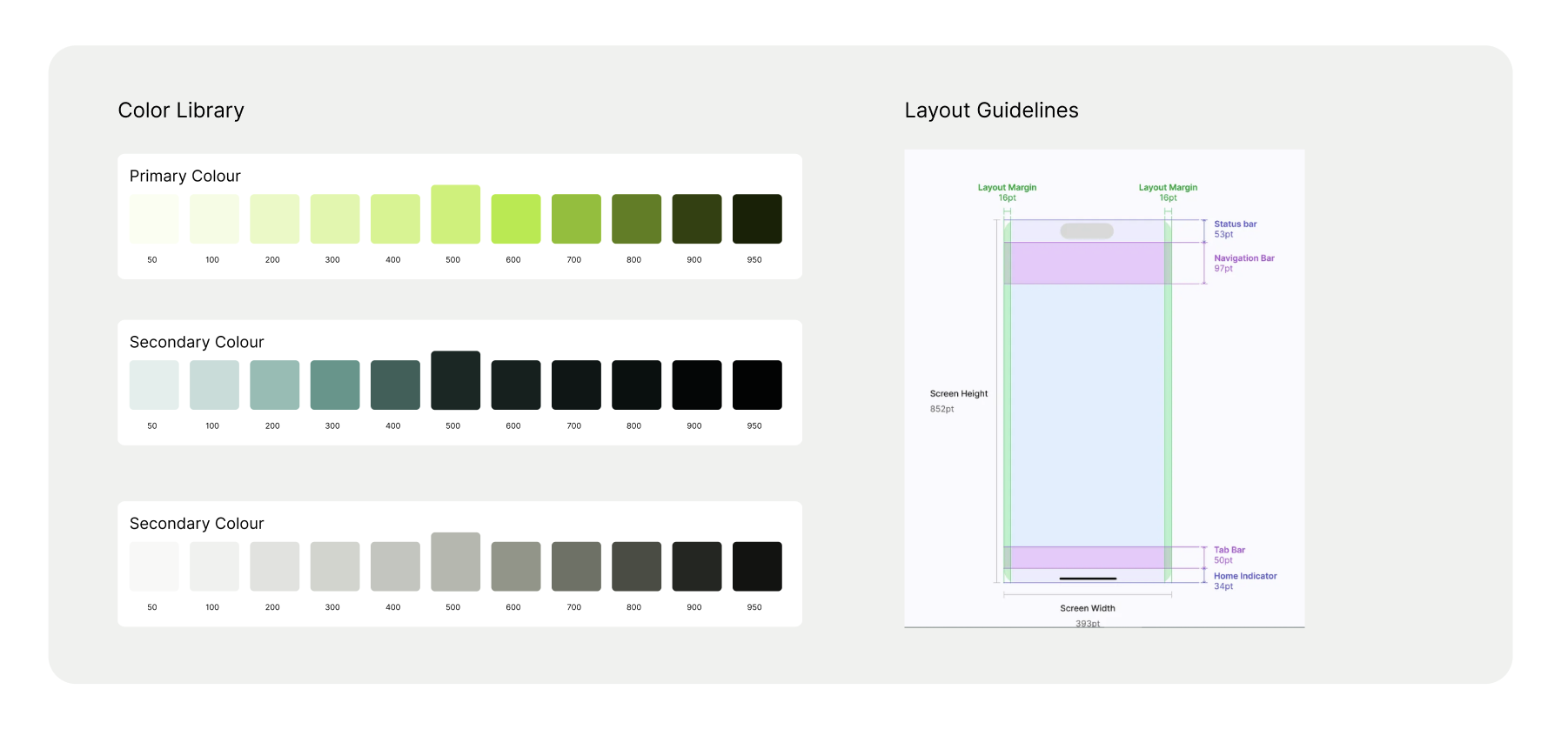
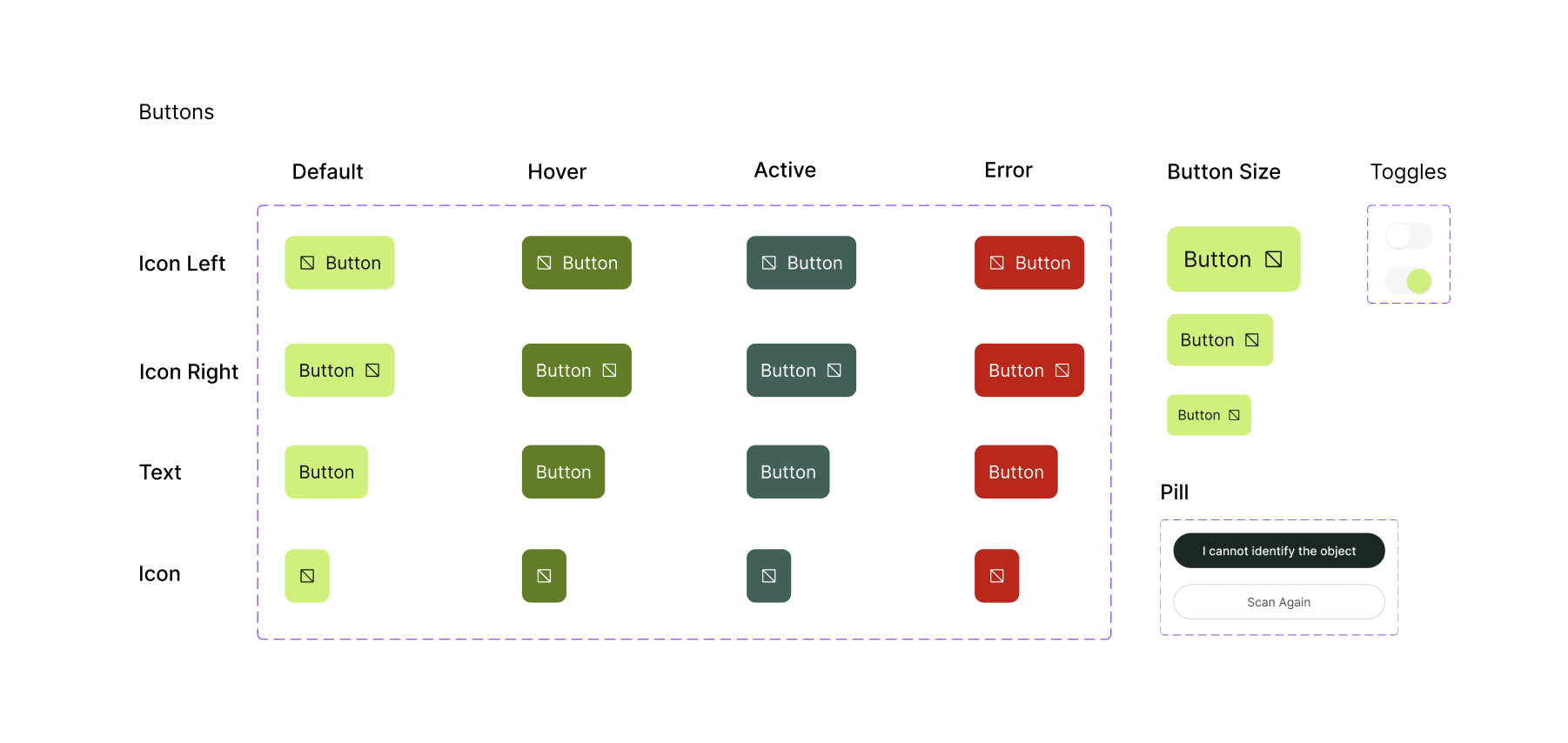
Design system, colour tokens and symbols, built for multilingual and colour-blind accessibility.
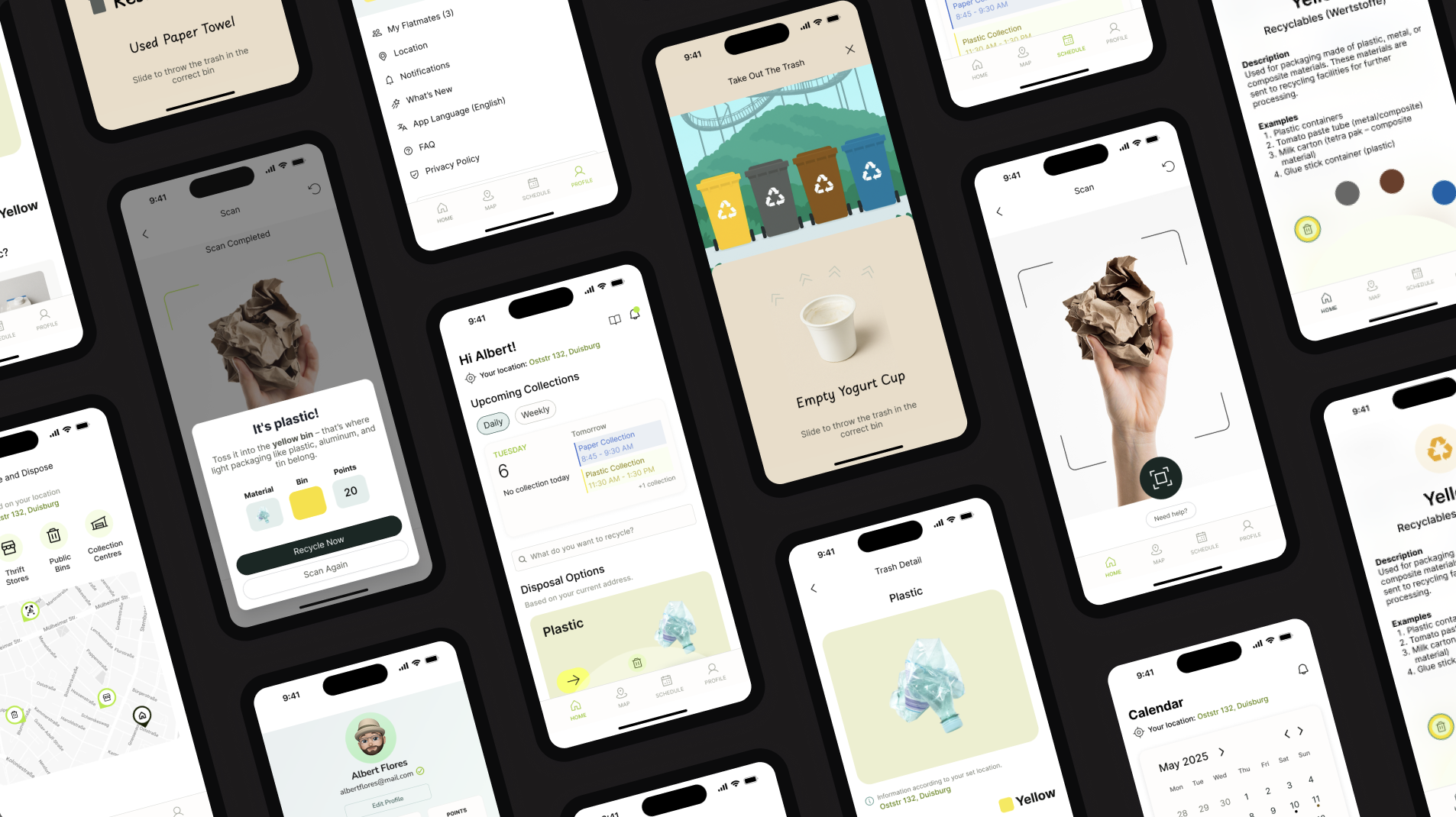
High-fidelity screens, scan, result card, location-aware guidance, challenge mode.
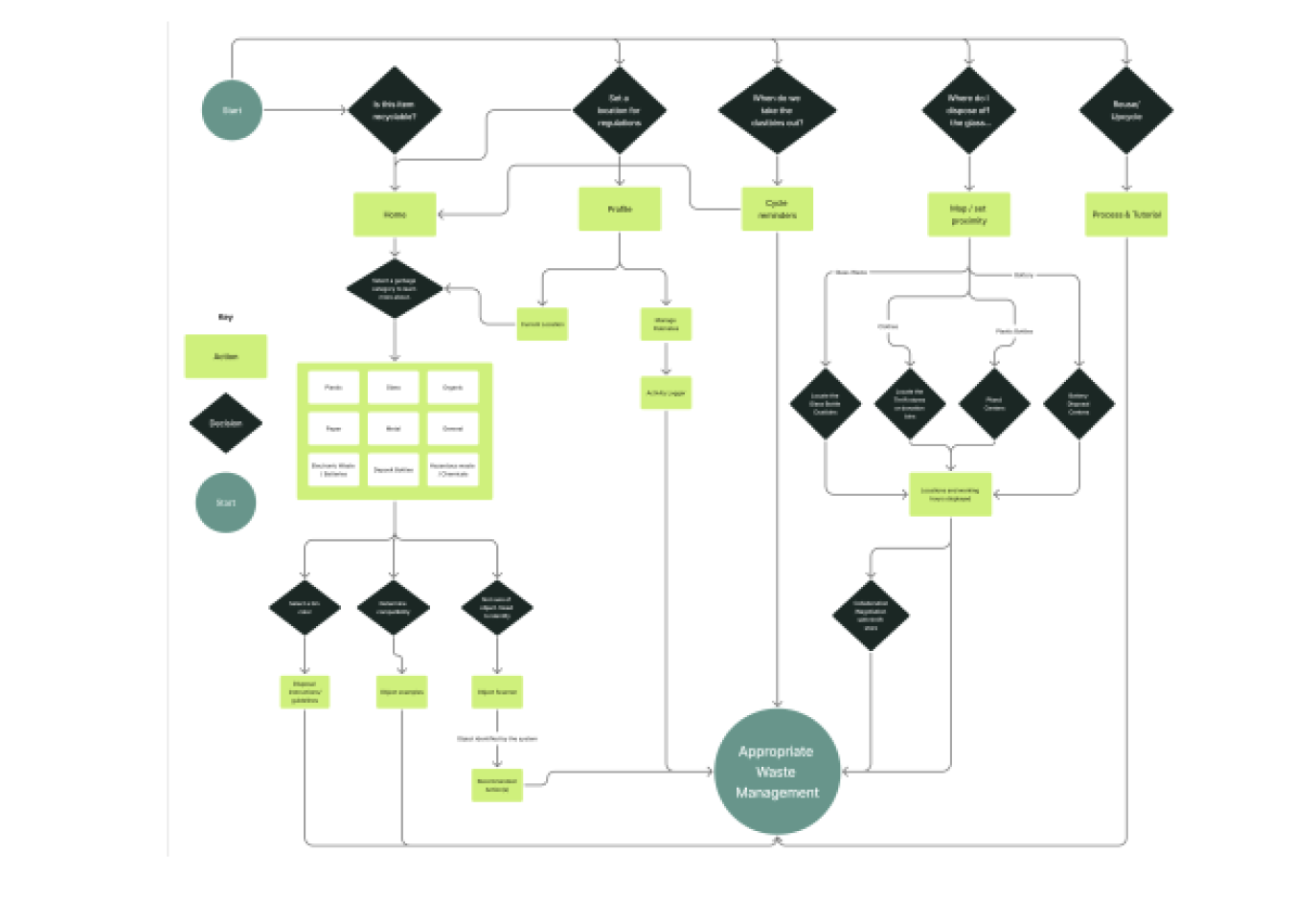
End-to-end UX flow, from onboarding through daily use.
Two assumptions held the early design back, both mine.
- "People want to learn the German system." I built a 5-screen onboarding that taught the four bin categories. Every single tester tapped Skip. They didn't want to learn, they wanted to not get it wrong right now. Teaching became a side tab called "Learn as you go."
- "Eco-impact numbers will motivate." I spent a sprint prototyping a dashboard that showed CO₂ saved per scan. In testing it felt like being graded, two users called it "guilt-tripping." I cut the whole screen and kept only one quiet number: a count of how many items the user had looked up. No scoring, no shame.
Both cuts hurt, they were the "cool" parts of the design. But the research kept saying the app's superpower was being invisible and low-stakes. I had to design for that, not for the version that would win at a pitch.
In usability testing, the app disappeared into the hand of the user, which was the point.
A moderated usability test with 5 participants on the high-fidelity prototype, 3 recent arrivals, 2 who'd been in Germany 2 to 5 years:
- Time to correctly sort a tricky item (coffee pod, pizza box, foil tray) dropped from ~3 minutes with "guess then google" to under 20 seconds with Müll.
- 4 of 5 said they'd switch to using Müll daily, the camera-first flow was the single most-cited reason.
- 100% task success on the top 3 flows (scan, check local rules, complete a challenge) after the first use.
- Pain point surfaced: users wanted scanned items to persist as a "recent items" history, added to the backlog.
What I take away: research isn't a phase, it's a counterweight. Every time I designed what I thought was "fun", users wanted "invisible". Letting that argument win is what made the app good.
Limitation: the camera-based identification was prototyped, not production-built. A full ML pipeline for European household waste identification is a separate engineering effort I didn't scope in this project. Müll currently assumes that recognition layer exists.