Trimol, a redesigned beard trimmer

A beard trimmer designed around the three annoyances nobody complains about but everyone has, the hunt for the charger, the noise, and the hand cramp, without compromising shave quality.
Beard trimmers are a product people buy, use daily for years, and almost never talk about.
"Good enough" has been the ceiling. I set out to look at the parts of the experience nobody was questioning, the noise, the grip, the ritual of finding the charger, and to see if any of them were actually solvable with current tech.
The brief was mine to set. I gave myself one month, zero budget, and a rule: every design choice had to tie back to a survey response or an interview quote.
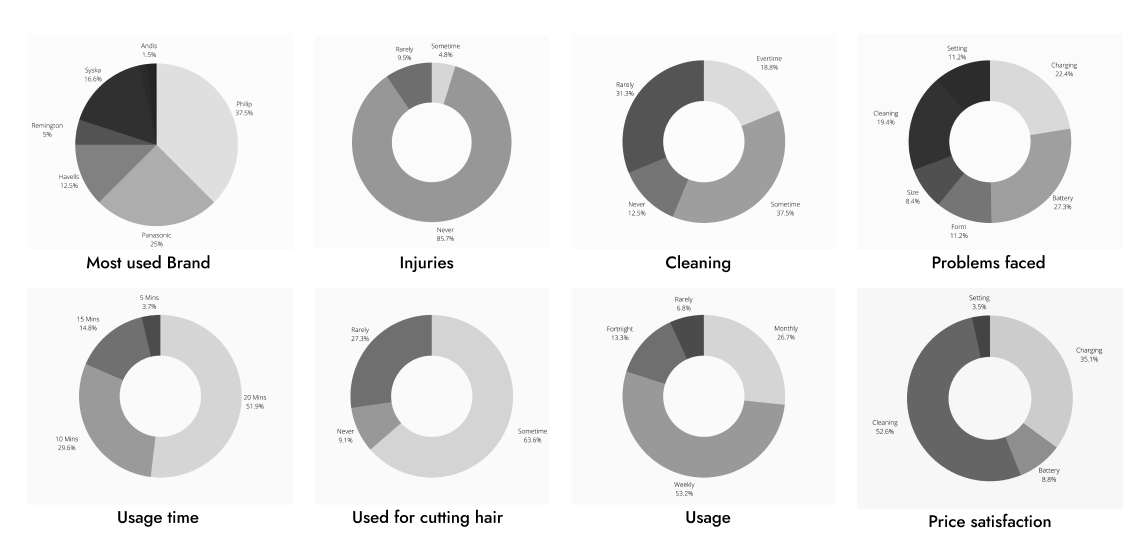
The daily frustrations were not about shave quality.
I expected the survey to say "better shave, closer cut, longer battery." It said something different.
- 73% ranked "finding my charger" as the top daily friction, higher than shave quality.
- 61% said the motor noise stopped them from using the trimmer when a partner or child was sleeping.
- 44% had experienced a hand cramp from gripping during longer sessions.
Shave quality came in fifth. The real design opportunity wasn't "a better shave", it was removing the three small daily annoyances everyone had accepted.
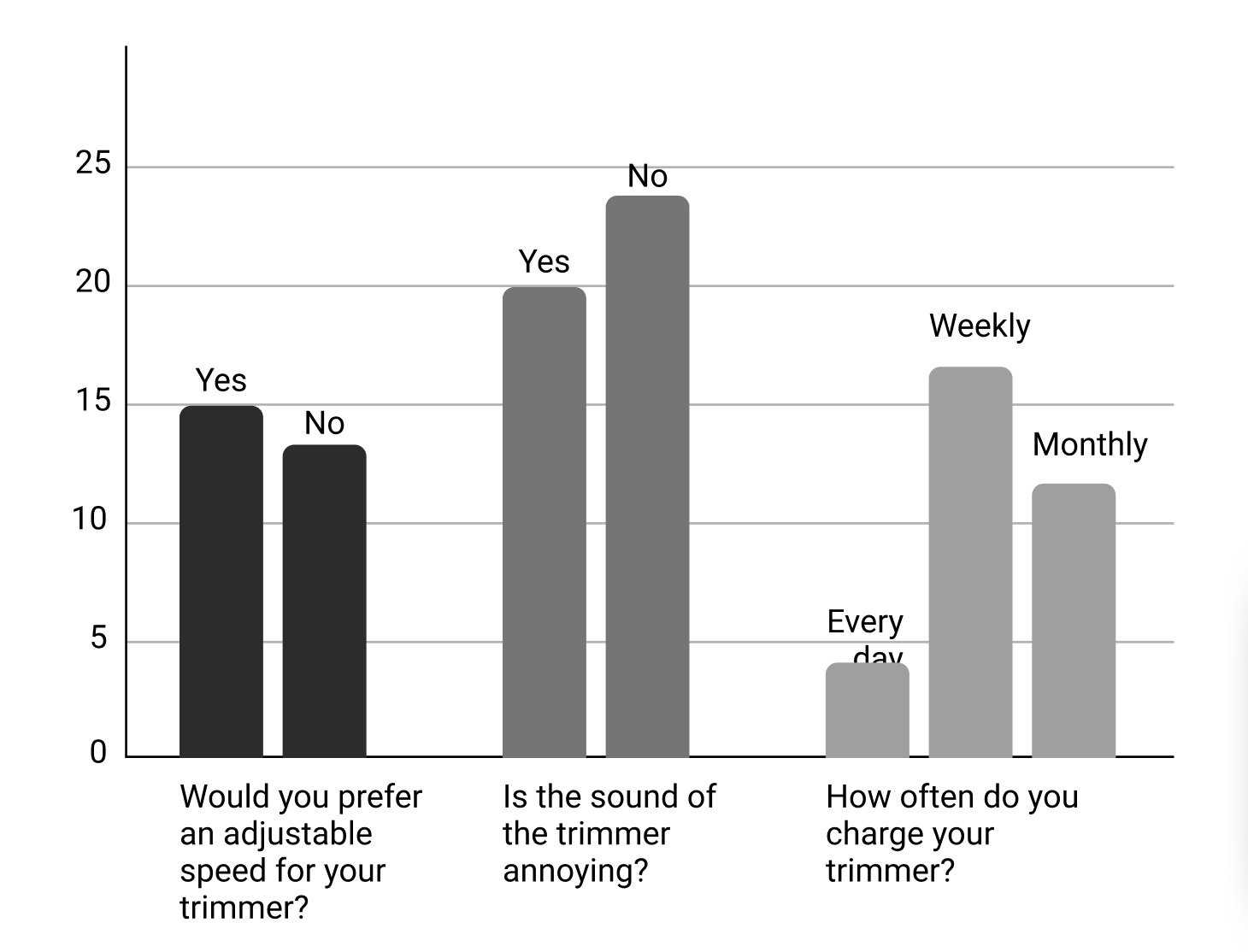
Survey results, 30 respondents, ranking daily friction against trimmer attributes they cared about most.
The interviews told me why the numbers mattered.
I followed the survey with 5 in-depth phone interviews, 30 minutes each. The quotes gave shape to the numbers:
"I bought an expensive trimmer and I still use a travel one in hotels because it's the one I remember to pack."Survey respondent, male 34
"The sound is the worst part. My kid wakes up every time. I shave at work now."Phone interview, new father
"I don't want more features. I want the trimmer to be the thing I don't think about."Phone interview, software engineer
That third quote reframed the brief: Trimol's job was to be invisible. The best feature was the one you didn't have to interact with.
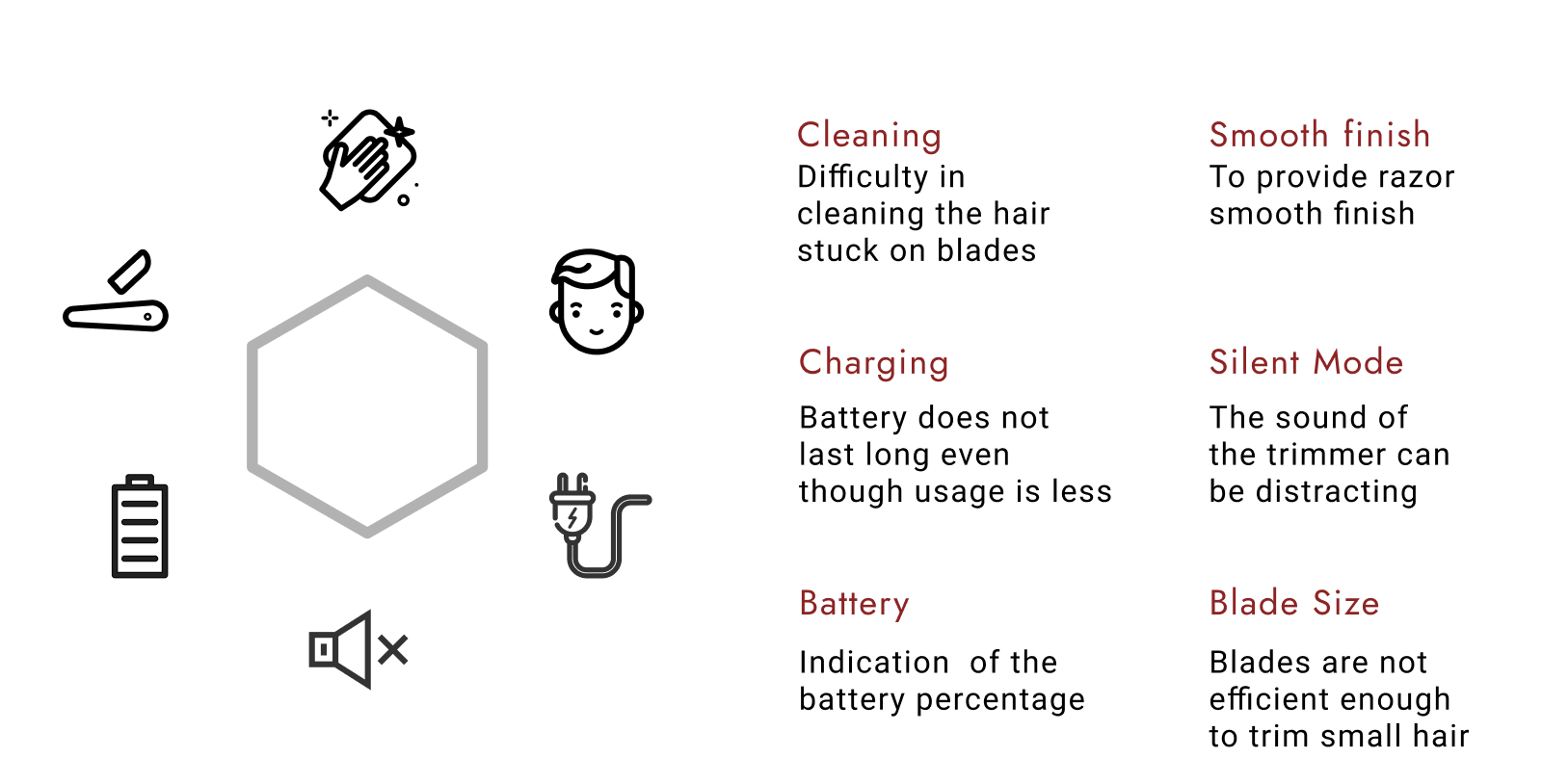
Opportunity areas, synthesised from survey plus interviews into three focal problems: noise, charging ritual, grip.
Four decisions that defined Trimol.
Foil head over rotary.
Foil heads run quieter on average (survey insight #2) and give a closer single-pass finish. Rotary's main advantage is working on longer hair, which the interviews said wasn't the primary use case for a daily trim. Foil won on noise + shave quality combined.
Magnetic charging case, not a separate cable.
73% of users couldn't find their charger. A case that is the charger means there's nothing separate to lose, and it doubles as the thing you grab when travelling, the same insight the "hotel travel trimmer" quote surfaced. One object, not two.
Visible battery indicator on the grip.
Interviewees said they only noticed battery state mid-shave, too late. Putting the indicator on the grip, not hidden under a cap, turned a surprise into a glanceable cue, the sort of change you notice only when it's missing from the other trimmer you've gone back to.
Slightly weighted, angled grip.
I prototyped 4 grip shapes in foam; testers with the cramp complaint reported the angled, back-weighted one as the only variant that felt "balanced" after 3 minutes. The grip is the only ergonomic surface that touches the hand, so it got the most prototyping time.
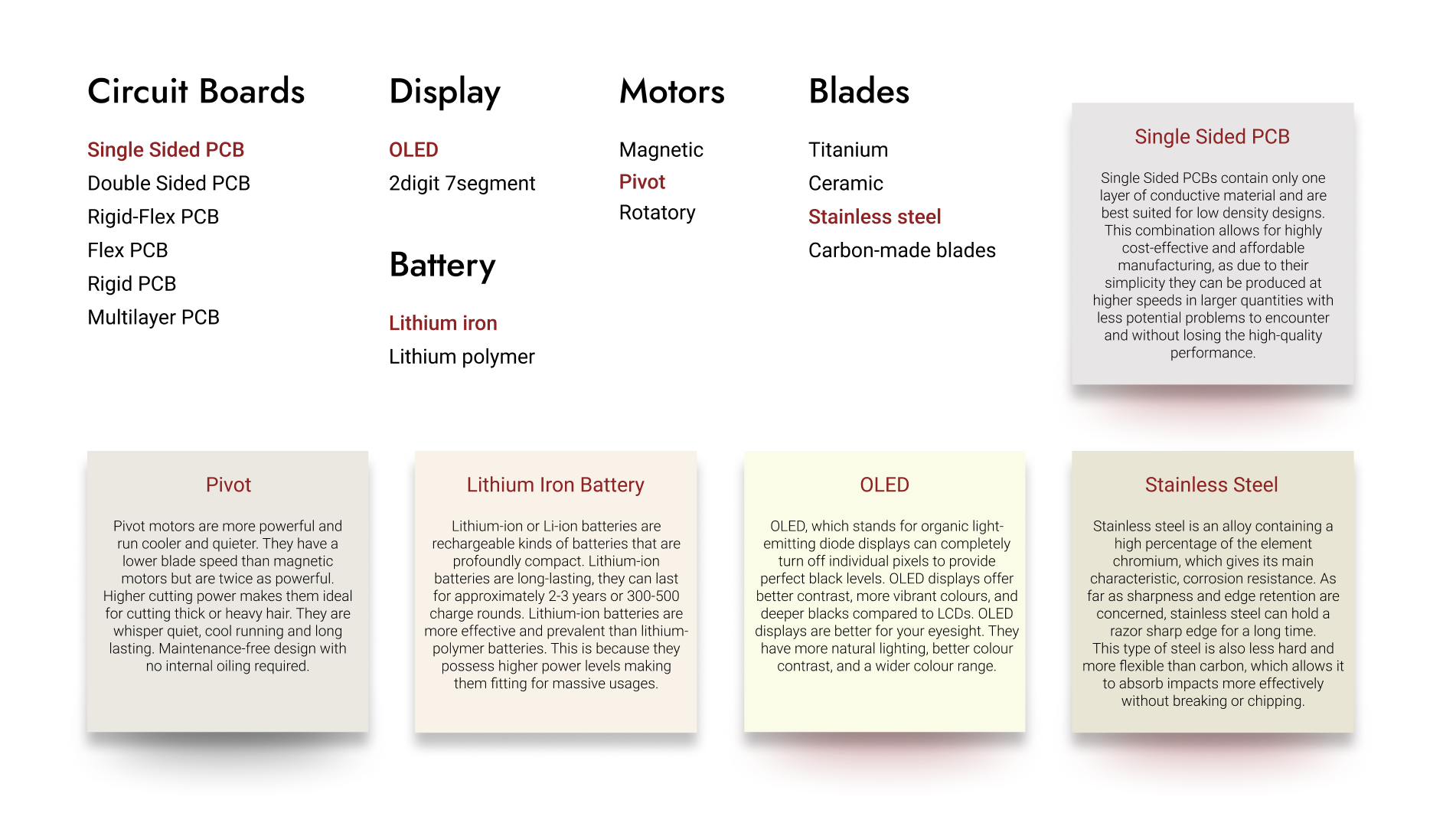
Tech exploration, I benchmarked motor types, foil vs rotary heads, and wireless charging standards against the three target problems.
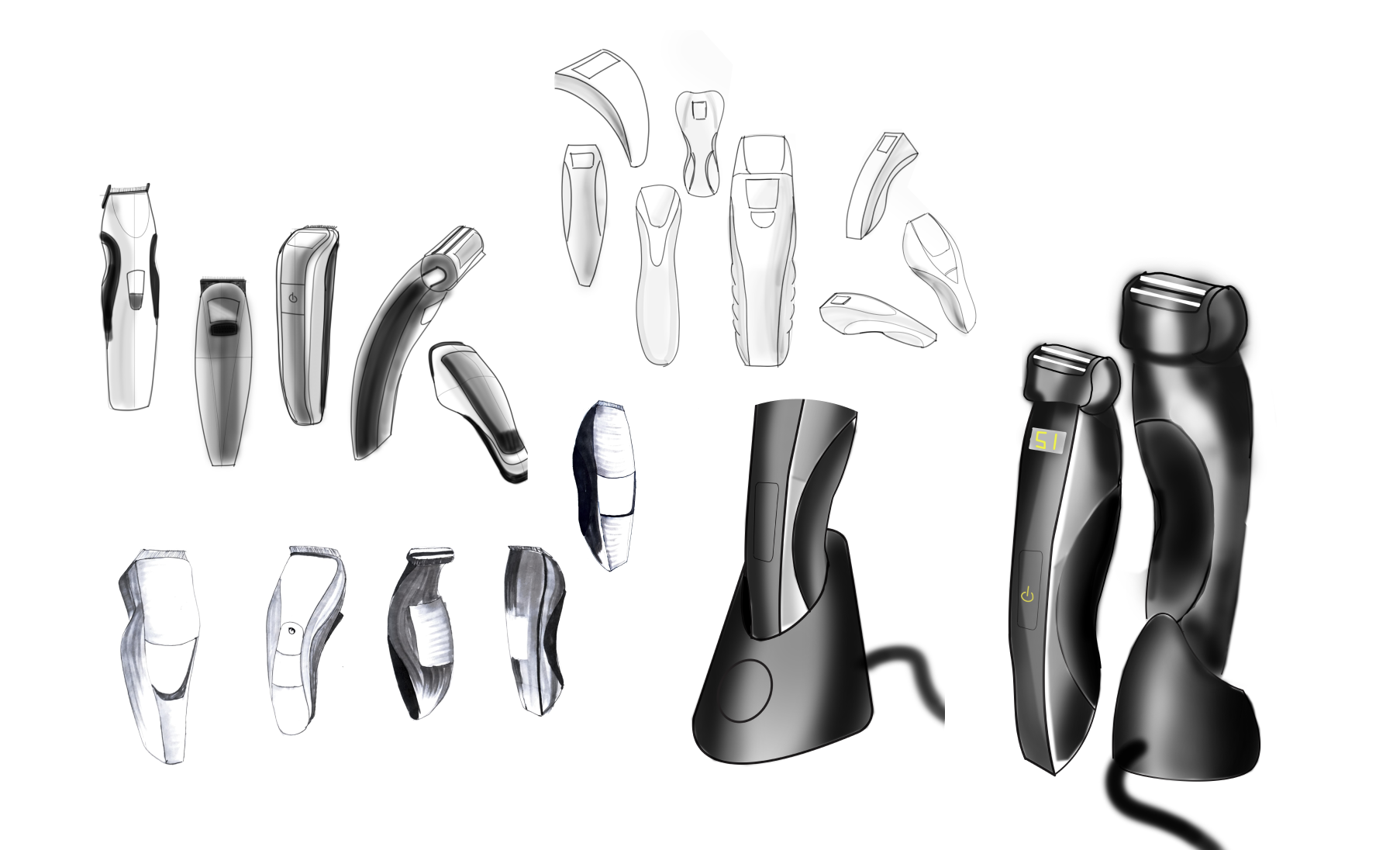
Concept sketches, exploring grip angle, charging case form, and battery indicator placement before foam prototyping.
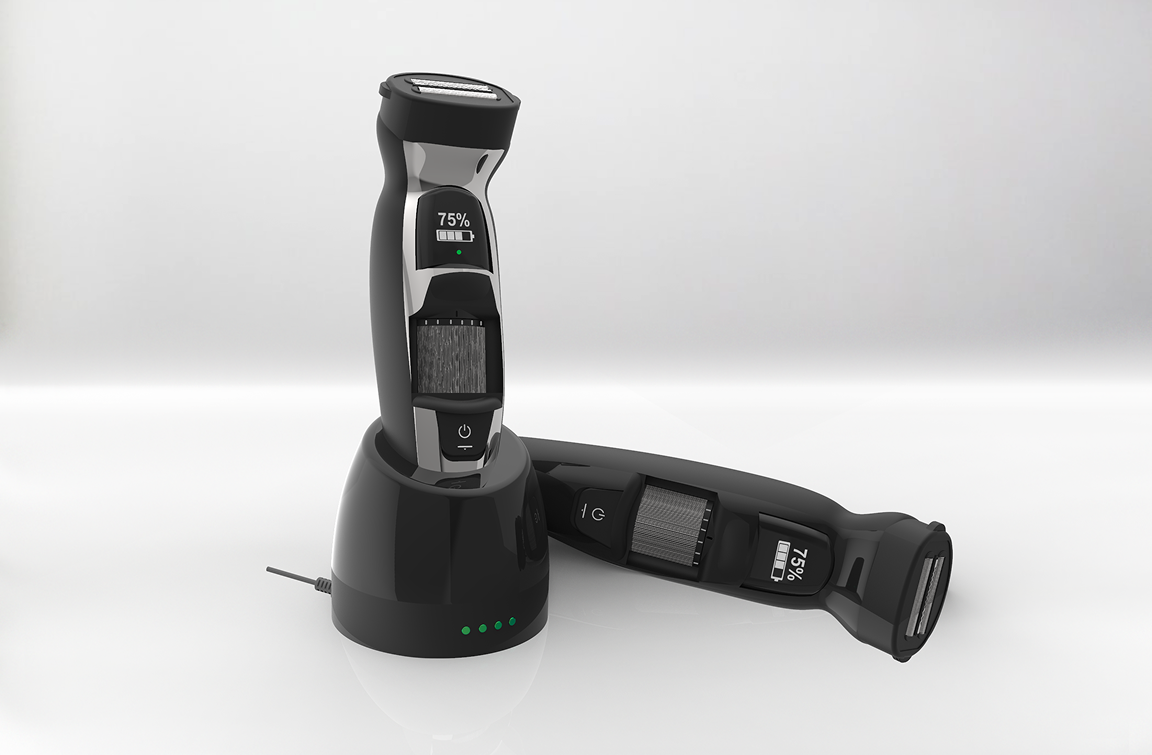
Trimol, the trimmer, the magnetic charging case, and a battery indicator on the grip.
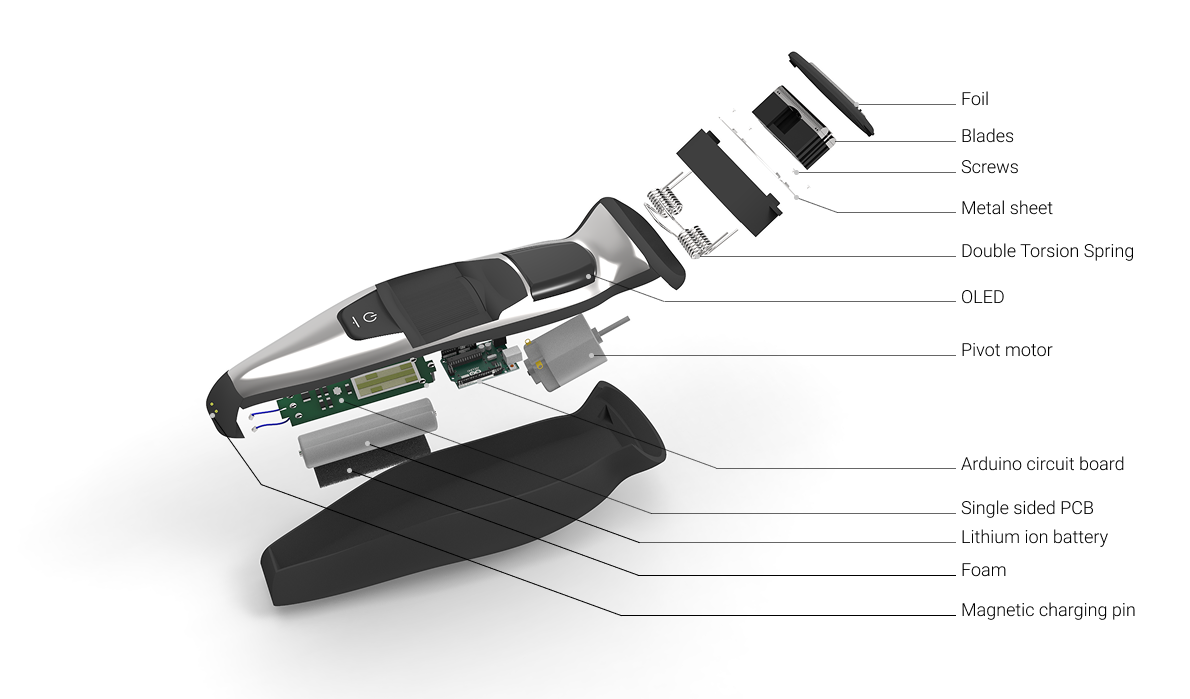

Components, exploded view (left) and detail (right). ABS plastic body, stainless steel blades.
Two things I built that I had to cut.
- A docking-base aesthetic. My first case was a vertical stand, visually similar to an electric toothbrush. Testers said it looked "medical" and they didn't want it on the bathroom counter. Moved to a flat clamshell case that reads as "travel accessory."
- A detachable trimming guide bundled in the case. Classic case of over-designing, 4 out of 5 testers lost the guide within a week in mock use. Integrated the guide into the head itself.
Patent registered, and two testers didn't give the prototype back.
Outcomes from the one-month build and a 2-week take-home trial with 6 participants:
- Patent registered for the magnetic charging case + battery-visible grip combination.
- All 6 reported no "lost charger" incident during the trial, the baseline survey said 73% of users had this friction weekly.
- 5 of 6 rated noise "noticeably quieter" than their current trimmer on a 5-point scale.
- Grip cramp reports dropped to 1 of 6 on long-session use.
- Two participants stopped using their old trimmer during the trial and asked to keep the prototype. Both unprompted.
What I carry forward: the most valuable features are the ones users stop noticing. Good industrial design disappears into the hand.
Limitation: the trial was 6 people over 2 weeks. A genuine field study across months, with older users, different hair types, and travel conditions, would have pressure-tested the ergonomic and durability claims. The sample is directional, not conclusive.